There’s a familiar complaint that politics has become stranger than fiction. However, a glance back throughout history reveals how books and films have always been an irresistible vehicle for writers and directors to depict the complexities of political upheaval – to warn, to inspire, and even help us come to terms with it.
Few recent books have done this more honestly than Lea Ypi’s memoir Free (Dua’s Monthly Read for July for the Service95 Book Club). Set against the collapse of Albanian communism, it highlights the particular cruelty of living through not one failed system but two. Through her recollections, which capture the confusion and instability of a life upended by radical change, Free offers an intimate understanding of experiences that might otherwise seem unimaginable.
As books expand our minds, films open our eyes. Sergei Eisenstein understood this nearly a century earlier. The Soviet epic Battleship Potemkin proved that revolt and societal transformation can be rendered on screen with as much precision as it could be written on a page. “Movies are there to share an experience,” says producer Max Arvelaiz, who collaborates with Oliver Stone – one of cinema’s most tireless political storytellers (most famously with JFK and Salvador). “They don’t replace political action, they animate it. They show politics isn’t just a system – it’s a series of choices made by real people. You can be one of them.”
From Costa-Gavras's Greece to Pablo Larraín’s Chile, from the fall of the Berlin Wall to postcolonial Algeria, the below books and films share one conviction: political upheaval is always a human story.
4 Books Depicting Political Upheaval
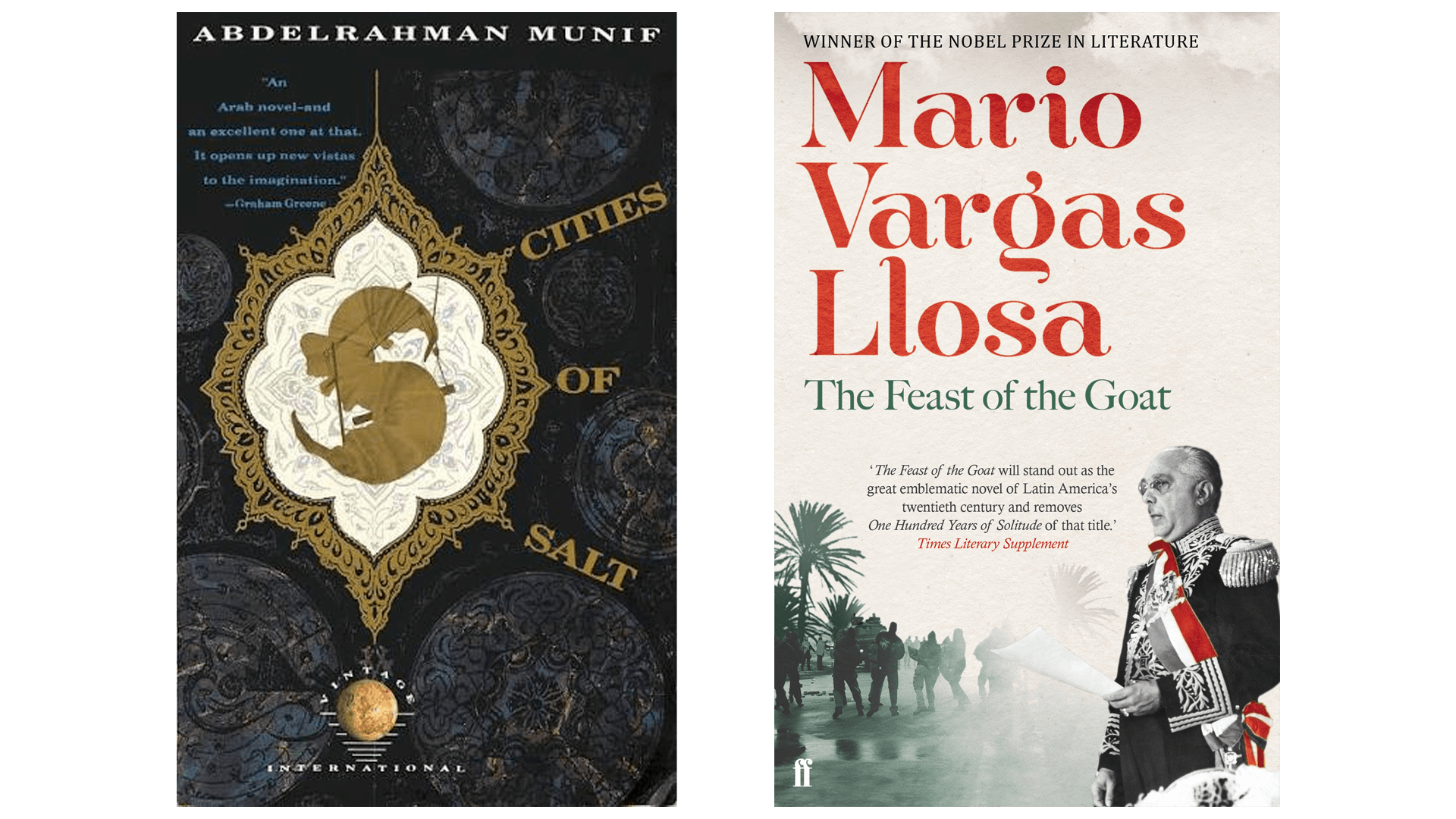
Cities Of Salt by Abdelrahman Munif
When American oil prospectors arrive in a remote Arabian desert community, they don’t just extract oil – they dismantle an entire way of life. Banned for many years across much of the Arab world, this novel, the first of a five-part cycle, is a devastating account of how economic transformation imposed from outside hollows out culture, community and identity from within.
The Feast Of The Goat by Mario Vargas Llosa
Mario brings us to the final days of Rafael Trujillo’s Dominican Republic in 1961 from three angles simultaneously: the ageing dictator himself, the conspirators planning his assassination and a woman returning decades later to confront what the regime did to her family. The structural ambition is matched by the psychological precision. This is a novel about how absolute power corrupts the inner lives of everyone who lives inside its shadow.
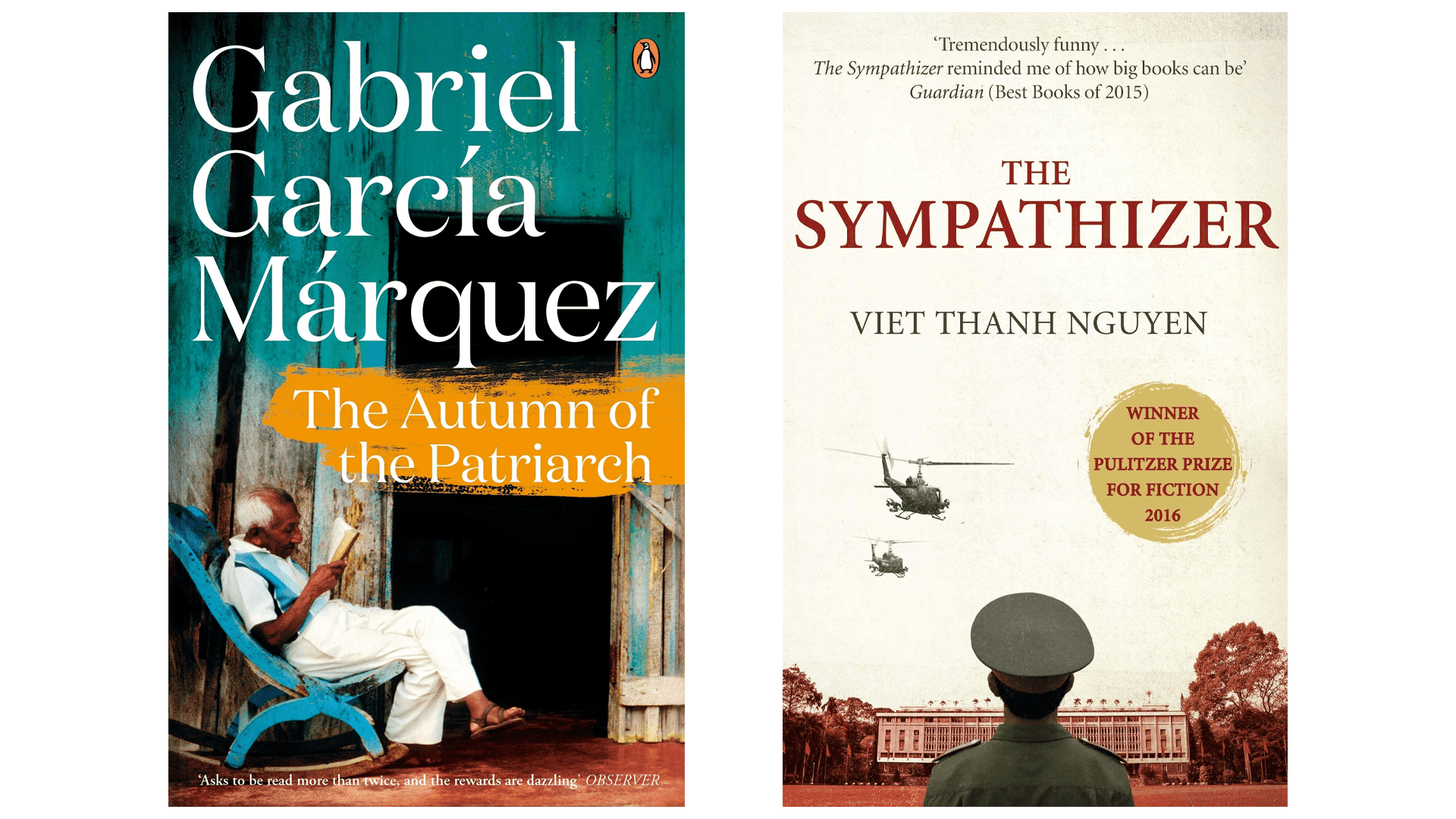
The Autumn Of The Patriarch by Gabriel García Márquez
Described by the author as “a poem on the solitude of power”, this novel is six, breathless single-paragraph chapters focusing on an archetypical tyrant. Dictators become figures of myth, as time itself is blurred. Not so much a story of regime change, but rather about decaying power before change becomes necessary.
The Sympathizer by Viet Thanh Nguyen
This Pulitzer-winning novel is about a communist double agent (“The Captain”) after the fall of Saigon in 1975, who has a dual life as an immigrant Hollywood advisor and mole. Superbly written, it articulates the loyalties, exile and contradictions that come with revolution.
6 Films Portraying Political Change On Screen
Jojo Rabbit by Taika Waititi
Taika Waititi directs this comic adaptation of Christine Leunens’ novel Caging Skies. The story of a ten-year-old Hitler youth member Jojo whose imaginary friend is the Führer himself (played with mocking whimsy by Waititi), gets complicated when he learns his mother (Scarlett Johanssen) is hiding a Jewish girl. As with Lea Ypi’s Free, the dangers of authoritarianism surface as Jojo is brainwashed into following sinister party lines, even at the cost of those he loves.
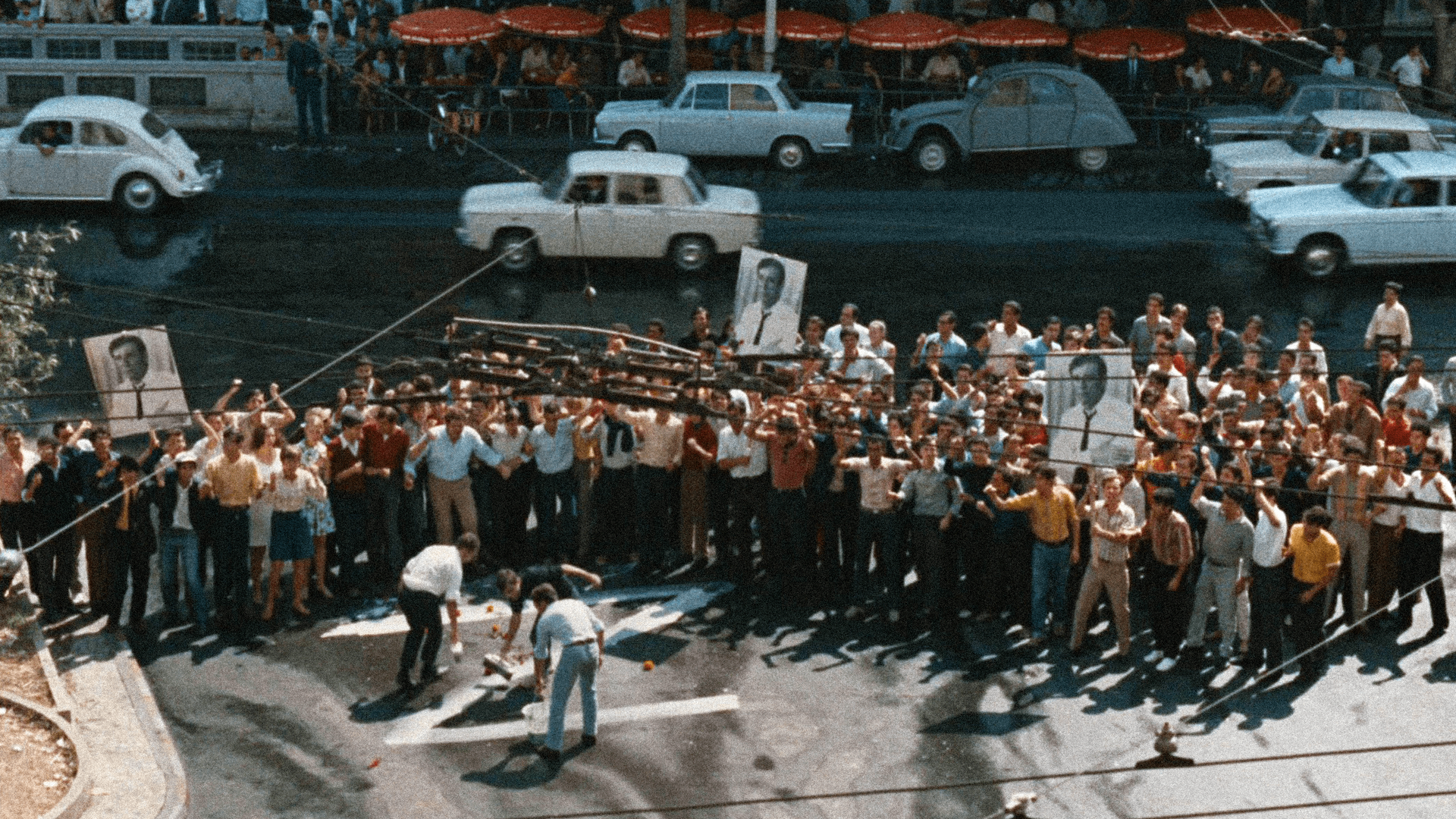
Z by Costa-Gavras
A political assassination. A cover-up. A magistrate who follows the evidence further than anyone wants him to. Costa-Gavras reconstructed events from his native Greece (the 1963 murder of left-wing politician Grigoris Lambrakis, prelude to the Colonels’ junta) with the kinetic energy of a thriller and a genuine moral seriousness. What makes it endure is its portrait of how democracies don't collapse dramatically but tilt, incrementally, through surveillance, complicity and institutional cowardice. Essential.
The Battle Of Algiers by Gillo Pontecorvo
Shot on location in Algiers with non-professional actors and the texture of newsreel footage, Pontecorvo’s film reconstructs the Algerian independence struggle in the 1950s with a moral even-handedness. The French government banned it for five years. The Pentagon screened it after Iraq. Violence is shown not as purely evil but as the internal logic of a colonial system that left no other door open. The greatest political film ever made.
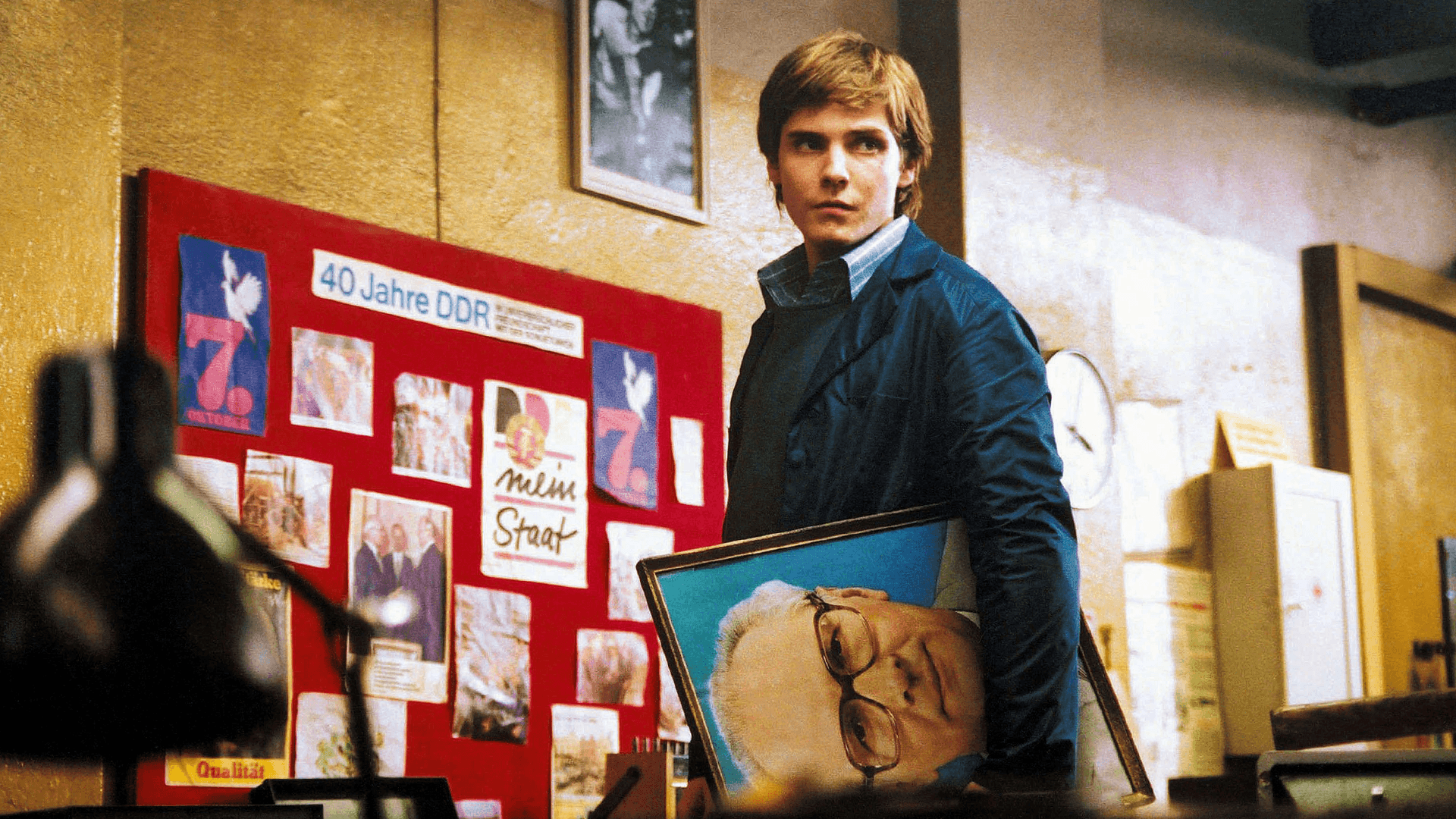
Good Bye, Lenin! by Wolfgang Becker
This heartbreaking tragicomedy revolves around a young man (Daniel Bruhl) who shields his sickly mother from the fatal shock that socialism has fallen in East Germany. Wolfgang captures the absurdity of change through affectionate delusions, set mainly across the late 1980s and early 1990s in East Berlin.
No by Pablo Larraín
Shot on period video cameras that give it the grain and flutter of actual archive footage, Larraín's film reconstructs Chile’s 1988 plebiscite against Pinochet through the story of a young advertising executive tasked with making opposition feel like optimism. It argues that the dictatorship was defeated partly through the aesthetics of “joy”. In an era of red baseball caps and culture-war branding, it has only grown more resonant. Gael García Bernal is quietly extraordinary in the lead.
The Death Of Stalin by Armando Iannucci
This hilarious, dark satire brings us into the Soviet rooms of power following Stalin’s death in 1953, where succession becomes an absurd power struggle. Iannucci shows the violence at the end of a regime, but also the scrambling opportunism that finally continues it. Genius.
Editor’s Note: This article has been updated since its original publication to reflect changes in the featured selections.
There’s More – Delve Deeper Into Lea Ypi’s Free With The Service95 Book Club...
WATCH Dua’s interview with Free’s author Lea Ypi
READ the books that shaped Lea Ypi’s writing
LISTEN to a playlist picked by Lea Ypi to soundtrack Free from start to finish
BOOKMARK five moments from Albania's recent past that put Free in context
DISCOVER our photo essay charting how communism left its mark on Albania’s landscapes
EXPLORE how natural beauty and rich history collide on a road trip through Albania’s mountains